
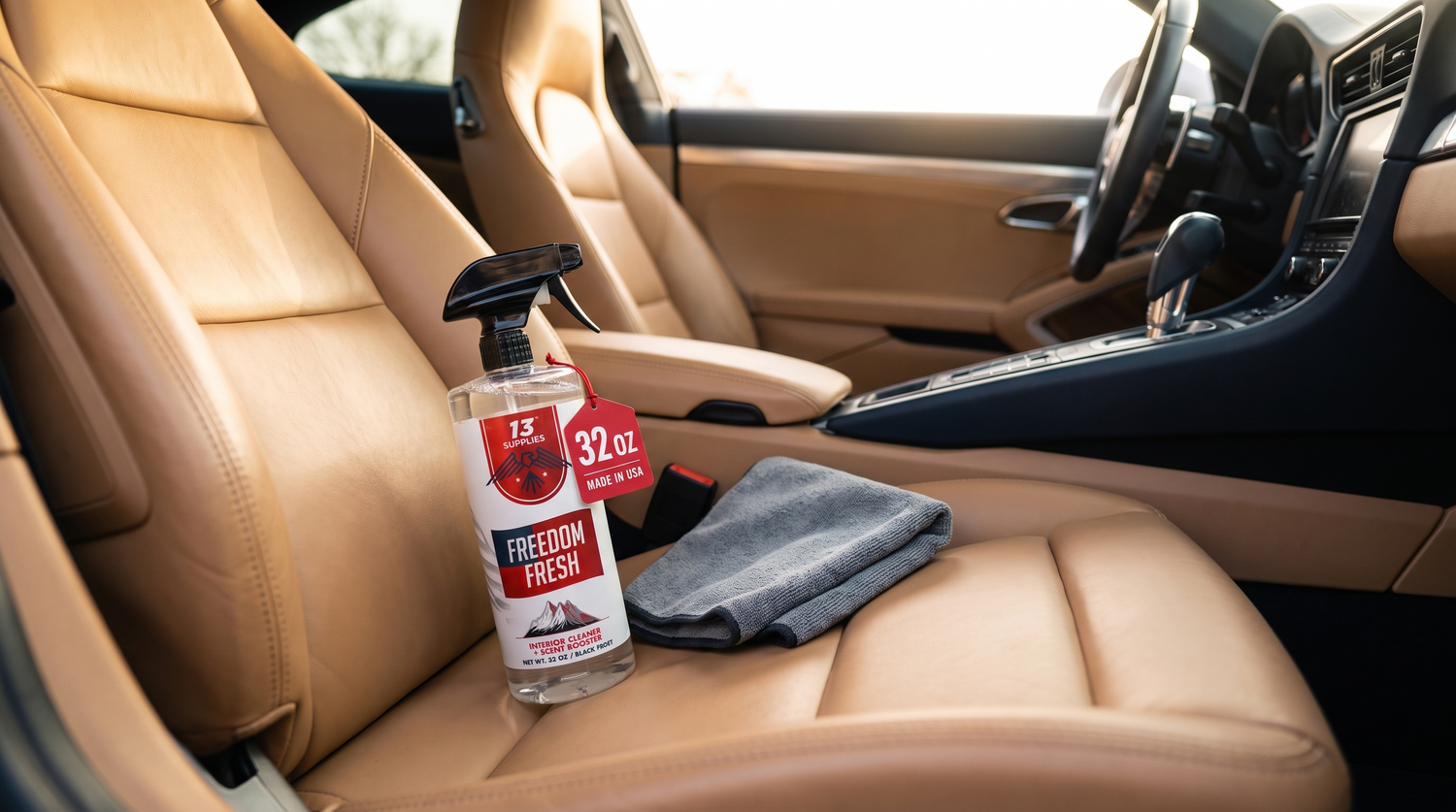
Leather seats look great right up until someone scrubs them with the wrong cleaner or skips conditioning for a year. Then they crack, fade, and stiffen up faster than anything else in the cabin. Cleaning leather the right way isn't hard, but it does mean setting aside the all-purpose sprays and shortcuts that work fine on plastic and vinyl. Leather wants its own process, and doing it right the first time beats trying to fix cracked, discolored seats down the road.
How Leather Actually Wears Out
Leather doesn't wear evenly, and knowing why makes the cleaning steps below a lot easier to follow.
Body Oils, UV, and Dryness
Every time you sit down, skin oils transfer onto the seat, and month after month that buildup breaks down the leather's finish. Meanwhile, UV from the sun dries out the natural oils inside the leather itself, leaving it stiff and quick to crack. Body oils working on the surface, UV pulling moisture from underneath — untreated leather ages faster than most owners figure.
Cracks Start Where You Don't See
The first cracks usually turn up in the high-flex spots: the bolsters and the crease behind your knees, where the leather bends every time somebody climbs in or out. By the time you can see a crack, the dryness underneath has typically been building for months. Regular conditioning keeps the leather supple enough to take that daily flexing without splitting.
Tools and Supplies: What You'll Need to Clean Leather Seats
Cleaning leather right takes a short list of supplies, and grabbing the wrong ones is exactly how the damage starts.
Soft Cloth, Soft Brush, Two Buckets
Grab a few microfiber cloths, a soft-bristle brush, and two buckets, one for your cleaning solution and one for rinse water. Steer clear of stiff brushes or anything abrasive. Leather scratches easier than people think, and those marks don't buff out. Keep some real interior car care products on hand too, so you're not reaching for whatever's under the kitchen sink and hitting the leather with something too harsh.
Cleaner and Conditioner Do Different Jobs
A leather cleaner lifts dirt, oil, and grime off the surface. A conditioner is a separate product that puts back the moisture cleaning and daily use strip away. Use only a cleaner and the leather ends up clean but dry over time. Skip to conditioner without cleaning first and you just trap dirt under the new coat. You need both. They're not interchangeable, and one won't stand in for the other.
Step 1: Vacuum and Wipe Loose Debris
Supplies ready? The first move is clearing off everything loose before any liquid touches the seat.
Crumbs, Sand, Pet Hair
Before liquid ever hits the leather, vacuum every crease, seam, and gap where debris settles. Sand and grit left in place will scratch the surface the second you start wiping. A soft brush attachment works pet hair and crumbs loose from the seams instead of driving them deeper. Finish with a dry microfiber wipe to catch whatever the vacuum missed.

Step 2: Apply Leather Cleaner
Now bring in the cleaner, and start careful instead of coating the whole seat at once.
Test a Spot, Then Work in Small Sections
Put a little cleaner on a hidden spot first, like the underside of the seat or the back of a headrest, and check it after a few minutes for any discoloration before you do the whole seat. Freedom Fresh Interior Cleaner and Scent Booster is a solid pick here. It's built to cut through everyday grime on leather, plus plastic and vinyl, without leaving a greasy residue behind. Once you've confirmed it's safe, work in sections about the size of a dinner plate, applying cleaner with a damp cloth and wiping in gentle circles instead of scrubbing back and forth. Handling small sections keeps the cleaner from drying onto the surface before you can wipe it off.

Treating Spills and Stains
For food, drink, or ink, put a bit more cleaner right on the spot and let it sit a minute before you wipe, rather than pressing harder. Catch stains while they're fresh and you save yourself a much bigger fight later. Fresh stains lift far easier than ones that have sat for days, so treat spills the moment you notice them instead of waiting for your next full clean. For stubborn or older marks, run through the process two or three times rather than leaning on it harder. Aggressive scrubbing damages the finish quicker than it lifts a stain.
Step 3: Agitate Gently
Cleaner alone won't get everything, so a light touch of agitation finishes the job without scratching the surface.
Soft Brush for Perforated Leather
Perforated leather, the kind with all the little ventilation holes, traps dirt down inside those holes where a cloth can't reach. Work a soft-bristle brush gently over the perforated areas to loosen that trapped dirt without pushing cleaner deeper into the padding underneath. Take your time here. Perforated sections are usually the most delicate part of the seat.
Wipe Clean With Damp Microfiber
Once you've agitated a section, wipe it down with a clean, damp microfiber cloth to pull off the loosened dirt and any leftover cleaner. Rinse that cloth often so you're not just dragging grime from one section to the next. Let the seat air-dry for a few minutes before you move on, since conditioner won't absorb right over damp leather.
Step 4: Condition the Leather
Seats clean and dry? Conditioning is the step that actually keeps them from cracking down the road.
Why Conditioning Leather Matters
Cleaning pulls off dirt and oil, but it also strips some of the leather's natural moisture along with it, which is exactly why you condition leather car seats after every deep clean. Skip this step and you've found the single biggest reason leather cracks years before it should. A good conditioner puts that lost moisture back and lays down a layer of protection against future UV and everyday wear.
Choosing and Applying a Conditioner
A conditioner is its own product, separate from your cleaner, made to feed moisture back into the leather. Look for one built for automotive leather instead of a generic furniture or shoe conditioner, since car leather has its own factory coating to work with. Put it on a microfiber cloth rather than pouring it straight onto the seat, then work it in with small circular motions, covering every section you cleaned. Let it soak in for the time on the label before anybody sits back down. Between full conditioning sessions, Freedom Fresh pulls double duty as a quick refresh for leather, plastic, and vinyl alike. Just remember it's a cleaner and scent booster, not a conditioner, so don't skip this step just because the seats already look and smell clean.

Maintenance Schedule for Leather Car Seats
A full clean and condition isn't a weekly job, but a couple of small habits keep your leather in good shape between sessions.
Weekly Wipe-Down
A quick pass with a dry or slightly damp microfiber cloth once a week keeps dust and light oils from building up between deep cleans. It takes under five minutes and cuts way down on how often you actually need the full process. Pair it with a quick pass on your car's carpet and floor mats or interior windows while you're already in there.
Quarterly Deep Clean and Condition
Every three months, run the full clean-and-condition above, even if the seats don't look dirty. Leather that looks fine on top can still be losing moisture underneath, and staying ahead of that on a schedule is what actually prevents cracking, instead of chasing it after the fact.
Keep That Leather Looking New
Cleaning leather takes more patience than a quick wipe-down, but skipping steps or grabbing the wrong products is how most leather interiors end up cracked and faded years before their time. Vacuum first, clean gently in small sections with the best interior cleaner for leather you can get your hands on, treat stains as they happen, and finish every session with a real conditioner. Stay on a quarterly schedule and your seats hold their color and feel for years instead of months.
13 Supplies makes interior car care products built to protect your leather, not just shine it up for a day. Start with Freedom Fresh Interior Cleaner and Scent Booster for the cleaning step, or grab it as part of a full interior/exterior bundle. Everything's made right here in America by a family-owned business — you can read our story here — and a portion of every sale supports the Wounded Warrior Project. Shop the full lineup at 13supplies.com and give your seats the care they've been missing.
Frequently Asked Questions
Can I use saddle soap on car leather?
No, keep saddle soap off car leather. It's made for thick, untreated leather like saddles and boots, not the finished, coated leather in most vehicles. Use it on your seats and you can strip the protective coating, leaving the leather wide open to stains and cracking. Stick with a cleaner made for automotive leather.
How often should I condition leather seats?
Every three months under normal use. If your vehicle lives outside or takes a lot of direct sun, plan on conditioning more often than that.
Will baby wipes work on leather seats?
Not really. Baby wipes can handle a light surface wipe in a pinch, but they aren't made to clean or condition leather, and they won't put back the moisture that real cleaning and conditioning restore.
My leather is already cracked; can I fix it?
Cracked leather can't be fully brought back without professional repair, but conditioning regularly from here on will keep the cracks you've got from spreading. Catch the dryness early with a steady conditioning schedule, and you stop new cracks from forming elsewhere on the seat.
Is perforated leather harder to clean?
It does take more care, since dirt and moisture can work down into the little holes and reach the padding if you use too much liquid. Go with a soft brush and wring your cloths out well before wiping to keep excess moisture from soaking through those perforations.
Is Freedom Fresh a leather conditioner?
No. Freedom Fresh is an interior cleaner and scent booster, great for cleaning and refreshing leather, plastic, and vinyl. For the moisture-replacing conditioning step, use a dedicated automotive leather conditioner right alongside it.

Leave a comment
This site is protected by hCaptcha and the hCaptcha Privacy Policy and Terms of Service apply.