
You wiped down the inside of your windshield, backed out of the driveway, and the low sun turned the whole thing into a hazy, streaky mess you can barely see through. It's one of the most annoying jobs in car care, and almost everybody does it wrong.
Here's the truth: the best way to clean inside car windows isn't about buying a fancier glass cleaner. It's about technique. Get the method right and you'll clear that film in a few minutes with no streaks and no headache. This guide breaks down why interior glass gets hazy and the two-towel system that fixes it.
Why Inside Car Windows Get Hazy
That film on the inside of your glass isn't ordinary dirt. It's a thin, oily haze — and knowing where it comes from is half the battle.
Plastic Off-Gassing
Your dashboard, door panels, and trim are all made of plastics and vinyl. When they heat up in the sun, they release tiny amounts of oily vapor — a process called off-gassing. That vapor drifts up and settles on the coolest surface in the cabin: your glass. Over weeks it builds into a greasy film that smears the second light hits it — completely normal, and why your windshield hazes over even if nobody touches it.
Smoke and Cooking Residue
If anyone smokes or vapes in the vehicle, that residue plates onto the glass and turns the haze into a stubborn yellow-brown layer. The oilier the film, the more important your technique is — because a light wipe just spreads it around instead of removing it.
What Actually Removes the Haze
Two things clear interior glass every time: the right towels and the right cleaner. Nail both and streaks basically disappear.
Two Towels — One to Wash, One to Dry
The single biggest upgrade is using two clean microfiber towels instead of one. One towel does the cleaning; the second, dry towel immediately buffs the glass before the cleaner can flash-dry into streaks. That drying pass is the whole secret. Streaks are just cleaner residue that dried on the glass — buff it off while it's still damp and there's nothing left to streak.
The Right Cleaner Matters
Skip the blue ammonia cleaners for interior glass. Ammonia fumes are harsh in a closed cabin, and if your windshield has any tint film or a heads-up display, ammonia can damage it over time. An ammonia-free glass cleaner — or even a good interior cleaner and plain distilled water on a microfiber — cuts the oily film without the risk.
Step 1: Move the Front Seats All the Way Back
Before you spray anything, make room to work. The base of the windshield is the hardest spot to reach and the spot people always miss.
Get Real Reach on the Windshield Base
Slide the seat all the way back and you can actually get your hand flat against the glass down where it meets the dash. That low strip is where off-gassing film is thickest, and it's impossible to reach cleanly while you're crammed against the wheel. A folded towel over your hand also helps you reach into the deep corners.
Step 2: Work Top to Bottom
Cleaning has a direction. Work top-down so anything that drips lands on glass you haven't finished yet — never on a section you just buffed clean.
Do the Top Strip First
Start along the top edge of the windshield and work down in overlapping passes. The very top strip, right at the headliner, collects a surprising amount of film and gets forgotten. Hit it first, then move down toward the dash.
Step 3: The Two-Towel Technique
This is the core of the whole method.
Wet Towel Cleans, Dry Towel Buffs
Lightly mist your cleaner onto the towel — not straight onto the glass, where it over-sprays across the dash. Wipe the section in horizontal strokes to break up the film. Then immediately follow with the dry towel in vertical strokes, buffing until the glass squeaks clean. Cleaning one way and drying the other has a bonus: if a streak shows up later, you'll know instantly whether it's inside or outside by which way it runs.
Change Towels When They Start to Smear
A microfiber towel can only hold so much oily film before it just moves it around. The moment your cleaning towel starts smearing instead of clearing, fold it to a fresh side or grab a new one. Same with the drying towel. A greasy towel is the number-one cause of streaks people blame on their cleaner.
Step 4: The Stubborn Haze Layer
Sometimes — especially on a windshield that's never been properly cleaned inside — one pass isn't enough. Here's how to break through.
If Streaks Won't Quit
Do a second full pass with fresh towels. Often the first round just cuts the top of the film and the second round finally clears the glass. For a baked-on layer, a little distilled water helps lift what the cleaner loosened, and a fresh dry towel buffs it out.
Keep the Dash Wiped to Slow Off-Gassing
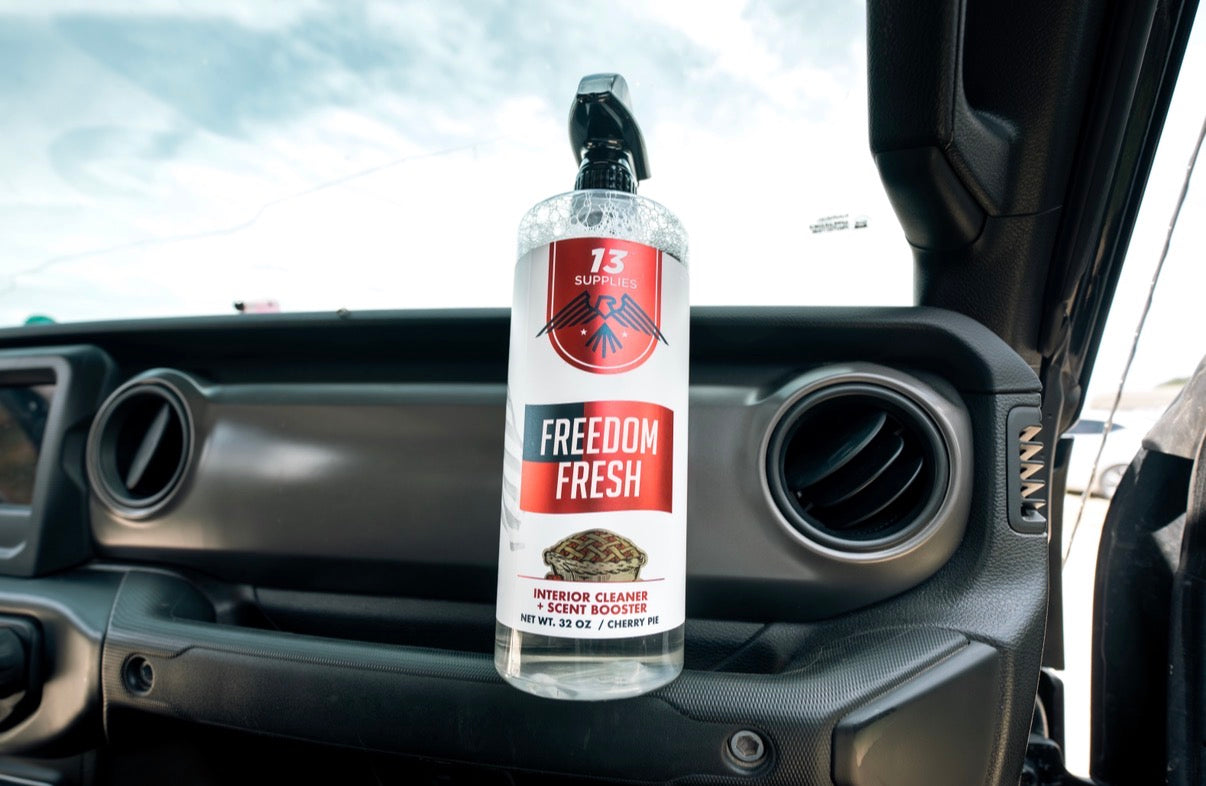
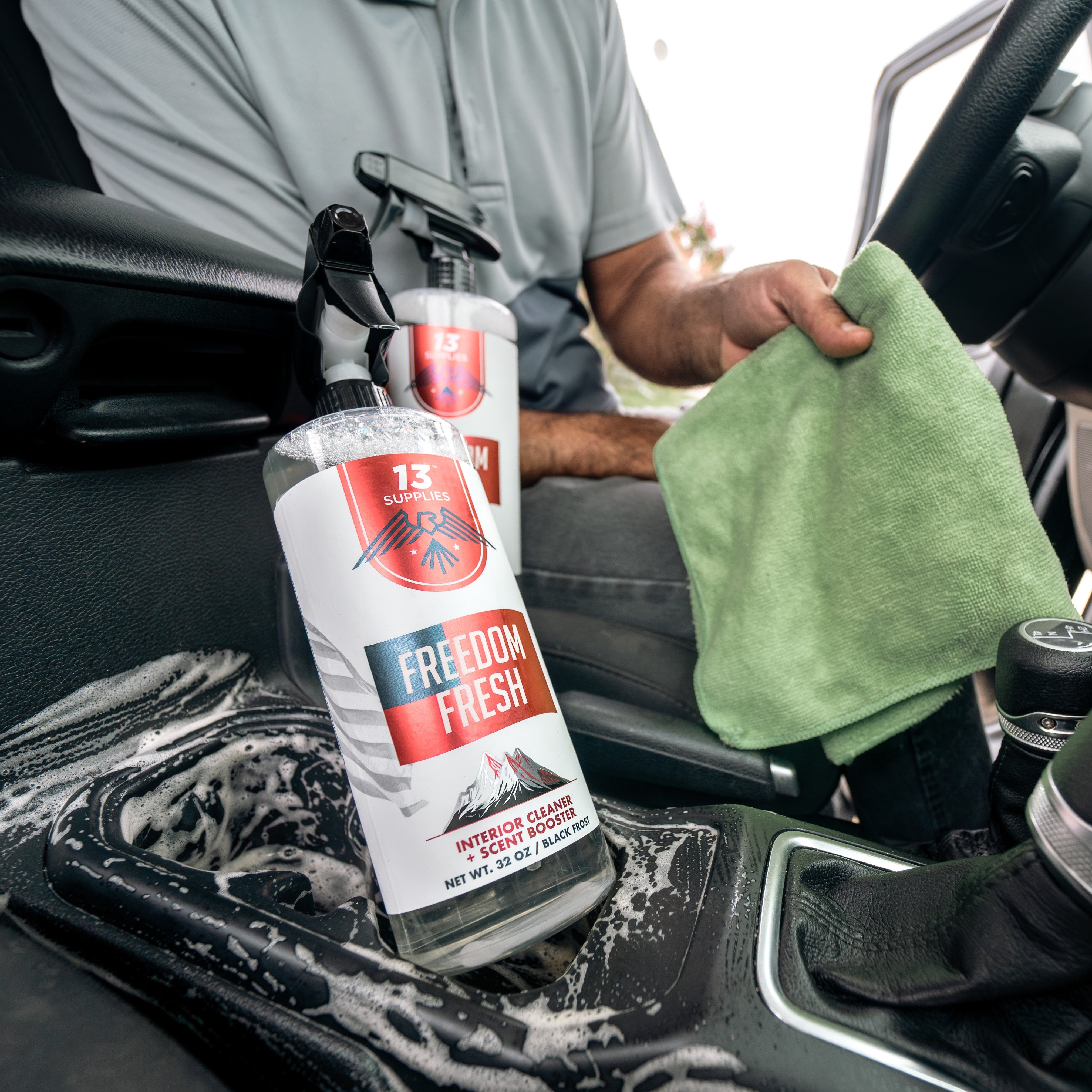
Want the haze to come back slower? Keep the dash and trim clean. Wiping your dashboard down regularly with an interior cleaner like Freedom Fresh removes the surface oils before they can off-gas onto the glass. A clean, well-kept dash literally means fewer trips back to the windshield — and it keeps the whole cabin smelling fresh. Tackling the whole cab? See our guide on how to clean your truck's interior like a pro.

Step 5: Side Windows and Rear Glass
The windshield is the hard part. Finish the job with the side and rear glass using the same two-towel method.
Roll the Windows Down to Get the Top Edge
There's a strip of glass that hides inside the door when the window's up — and it's always filthy. Roll each side window down an inch or two and clean that top edge first, then roll it up and finish the rest. Miss it and you'll see a dirty line every time you lower the window.
Mind the Defroster Lines on the Rear Glass
The rear window has those thin defroster lines baked onto the inside of the glass, and they scratch off if you scrub hard across them. Wipe gently and go with the lines, not against them. The two-towel method's light touch is perfect here — let the cleaner and the buff do the work, not pressure.
Frequently Asked Questions
Why does the inside windshield haze come back so fast?
Because your dashboard never stops off-gassing. Every time the interior heats up, the plastics release a little more oily vapor that settles on the glass. You can't stop it entirely, but keeping the dash and trim wiped down slows it way down and stretches the time between cleanings.
Can I use ammonia glass cleaner inside the car?
It's better to avoid it. Ammonia fumes are unpleasant in a closed cabin and can damage window tint film and dashboard-mounted screens or heads-up displays over time. An ammonia-free glass cleaner — or distilled water on a quality microfiber — clears the film without the risk.
Are microfibers really better than paper towels?
Yes, and it's not close. Paper towels leave lint and can smear the oily film around, while a clean microfiber grabs and holds it. The two-towel microfiber method is the single biggest reason your glass comes out streak-free. Paper towels are a big reason it doesn't.
What about anti-fog products?
Anti-fog coatings can help in humid climates, but they only work on truly clean glass. Clear the oily haze first with the method above, then apply the anti-fog to a spotless surface. Put it over a filmy window and it just streaks and wears off fast.
Clear Glass, No Streaks, American-Made
The best way to clean inside car windows comes down to two clean towels, an ammonia-free cleaner, and a top-to-bottom pass — no magic product required. Keep your dash wiped with Freedom Fresh and the haze stays gone longer. Freedom Fresh is made right here in America by a family-run business, and a portion of every sale goes to support our troops and veterans. Grab it on its own or in one of our value bundles, and check out the rest of our how-to guides.

Leave a comment
This site is protected by hCaptcha and the hCaptcha Privacy Policy and Terms of Service apply.