
Your floorboards take more abuse than any other part of your truck or car. Boots track in mud, road salt rides in all winter, coffee spills soak in, and it all gets ground down into the carpet by your own two feet. Left alone, that grime doesn't just look bad — the salt and moisture sitting in the backing can start to rust the floor pan underneath.
The good news: you don't need a detail shop to fix it. This guide walks you through exactly how to clean car carpet and floor mats the right way — pull the mats, vacuum deep, pre-treat the stains, wash, and dry so it stays clean. Set aside an hour on a dry day and let's get after it.
Why Car Carpet Stains Are Stubborn
Before you start scrubbing, it helps to understand what you're actually fighting. Car carpet isn't like the carpet in your house, and that changes how you clean it.
The Backing Holds Moisture
Automotive carpet is glued to a dense foam and rubber backing that sits right on the metal floor. That backing acts like a sponge. When you dump water and cleaner on it, the liquid — and whatever grime it lifts — sinks down and gets trapped. That's why a carpet can look clean on top and still smell musty a week later, and it's why the golden rule of car carpet is: never soak it. You want to clean the fibers, not flood the floor.
Salt Is Different From Mud
Mud is just dirt and water. Once it dries, it vacuums right up. Road salt is a whole different animal. It's a mineral that dissolves into the carpet, dries into white crusty rings, and comes right back every time the fibers get damp. You can't vacuum salt out — you have to dissolve it, lift it, and pull it back out with moisture. Treat salt stains like their own job and you'll stop chasing the same white rings all winter.
Tools and Cleaner You'll Need
Stiff Brush, Wet/Dry Vac, and a Good Cleaner
You don't need a truckload of gear. Here's the short list that gets it done:
- A wet/dry shop vac — the single most important tool. It vacuums dry dirt and pulls moisture back out when you're done.
- A stiff-bristle detailing brush — to agitate cleaner down into the fibers.
- A quality interior cleaner — the stuff that actually breaks down the stains.
- A few microfiber towels and a bucket of clean water for rinsing.
Why Freedom Fresh Handles Most Stains
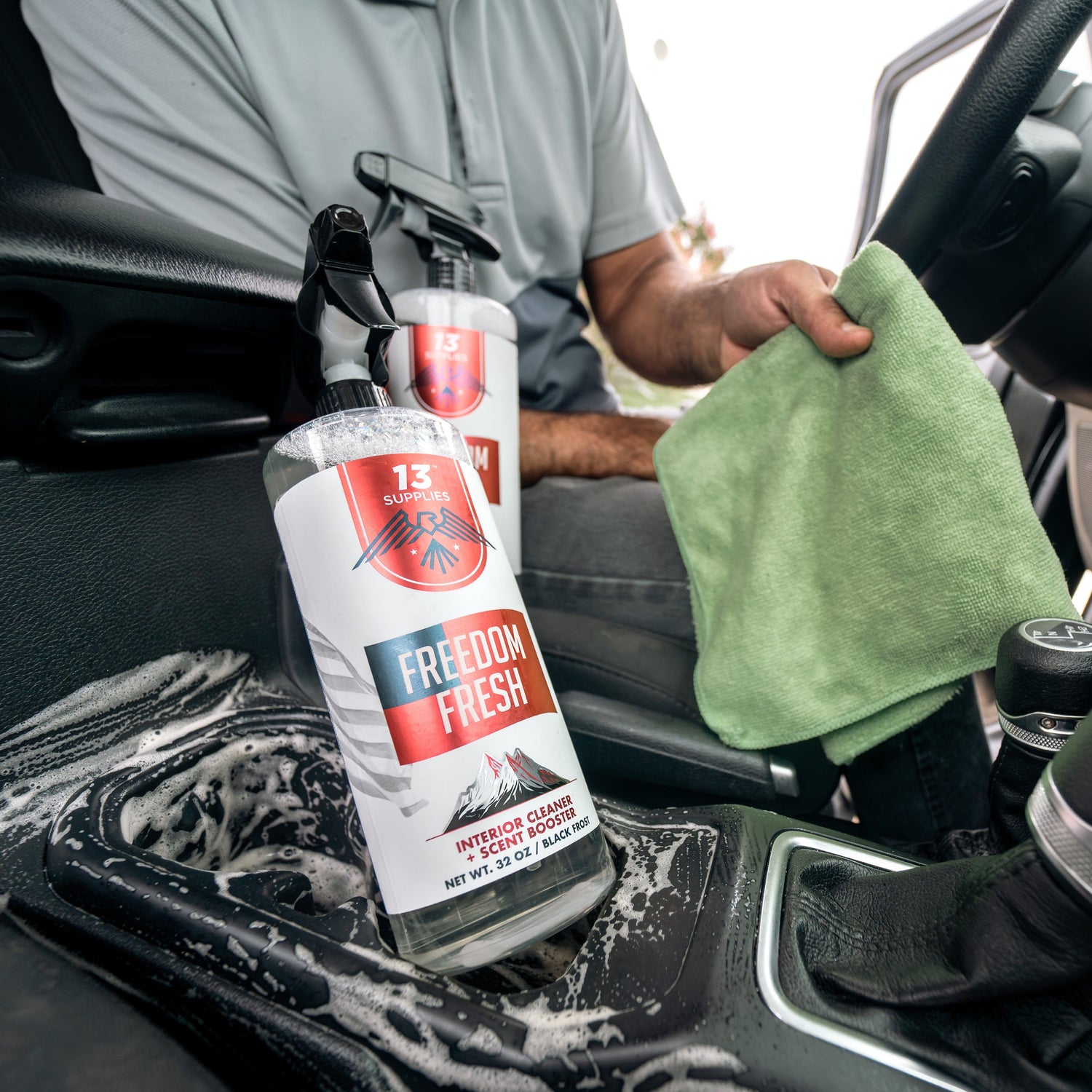
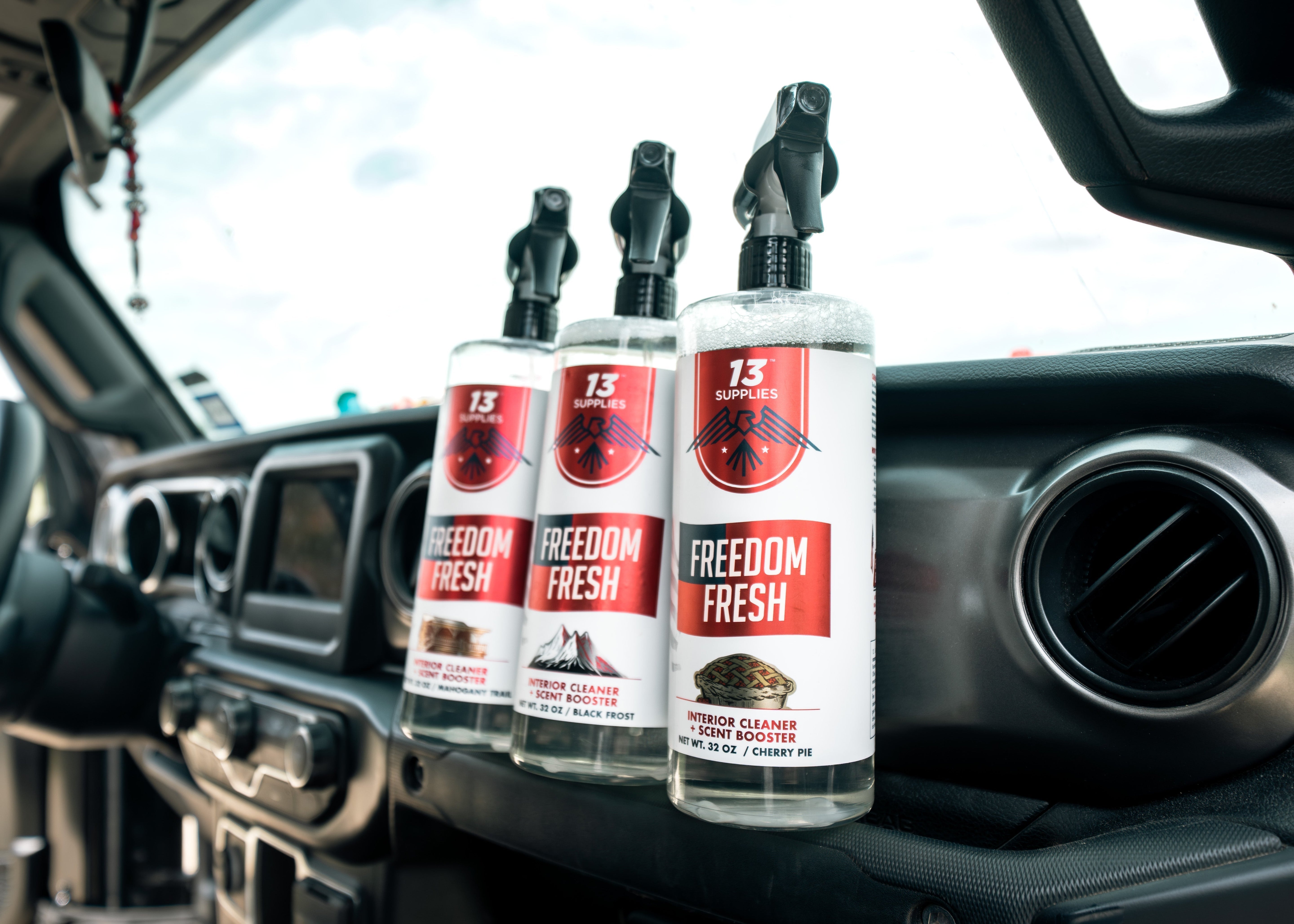
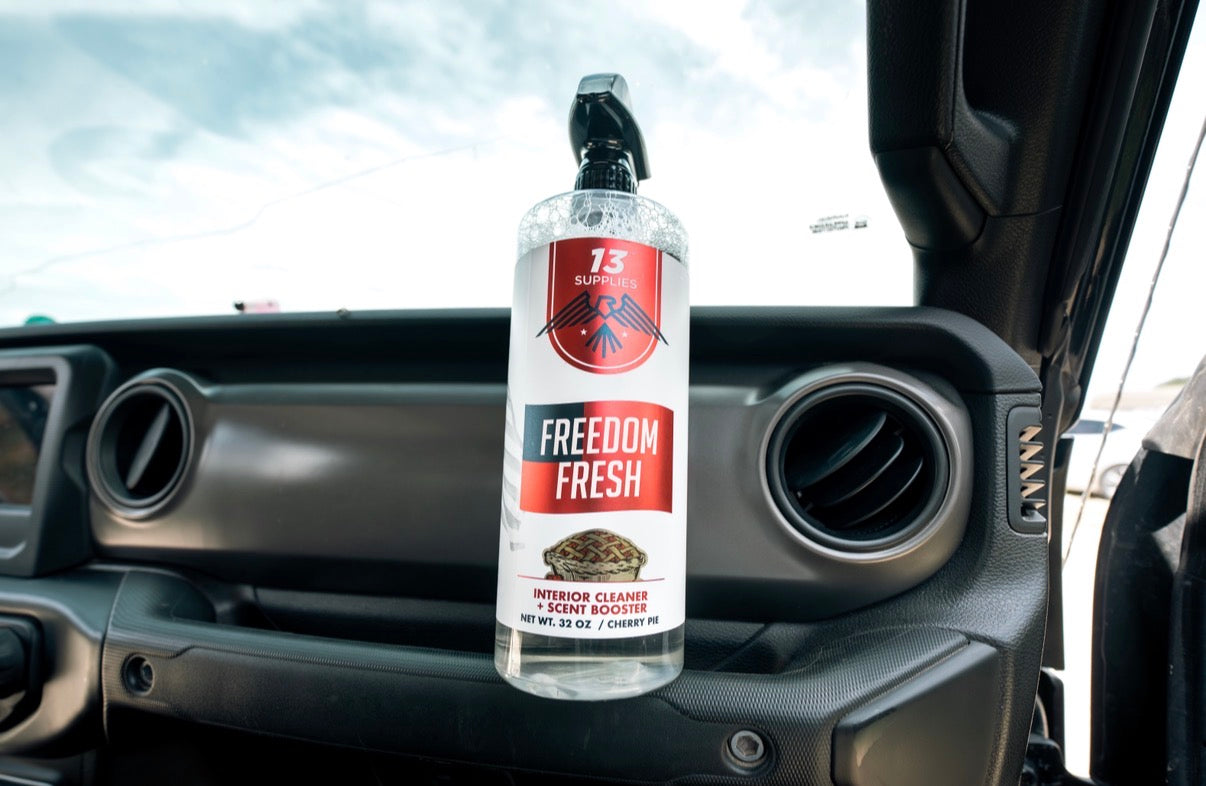
For the carpet and mats, reach for Freedom Fresh, our American-made interior cleaner and scent booster. Spray it on, agitate with the brush, and it breaks down the mud, food, and salt residue that daily driving leaves behind — then leaves the cabin smelling clean instead of like a wet dog. For heavy, greasy shop grime or oily boot marks that a standard interior cleaner won't touch, step up to Machine Clean, our all-purpose heavy-duty cleaner.
Whatever you use, spot-test a hidden corner first. Doing the seats in the same session? Here's the best way to clean cloth car seats and upholstery.
Step 1: Pull and Shake the Mats
Always start with the mats out of the vehicle. They protect the carpet, so they're the dirtiest thing in there — and you can't clean the carpet properly with them in the way.
Rubber Mats — Hose Them Off
Pull your rubber or all-weather mats and knock the loose dirt out against the ground. Lay them on the driveway, hose them down, and hit any caked-on grime with a little interior cleaner and your brush. Rinse, then stand them up to drip-dry while you work on the inside. Don't put a wet mat back on clean carpet.
Carpet Mats — Vacuum First
Cloth floor mats need a good dry vacuum before anything gets wet, same as the carpet. Shake them out hard, then vacuum both sides. If they've got stains, pre-treat and wash them right alongside the vehicle carpet in Step 3 and 4 — just remember they have the same spongy backing, so don't soak them either.
Step 2: Vacuum the Vehicle Carpet
A thorough dry vacuum is 90% of the job. If you skip it and go straight to cleaner, all you're doing is making mud. Get every bit of loose dirt, sand, and crumbs out first.
Use the Crevice Tool Along the Edges
The dirt hides where the carpet meets the seats, the console, and the door sills. Swap to the crevice tool and run it tight along every seam and edge. Work the transmission hump and under the pedals, too — that's where the heaviest grit collects.
Move the Seats All the Way Forward and Back
Slide the front seats all the way forward to reach the carpet behind them, then all the way back to get the footwells. You'll be shocked what comes out from under there — French fries from three road trips ago. Vacuum slow and let the machine do the work; fast passes leave grit behind.
Step 3: Pre-Treat the Stains
Now hit the problem spots before you wash the whole floor. Pre-treating gives the cleaner time to break down set-in stains so they release instead of just smearing around.
Salt Rings
For those white salt rings, mist the area with water first to start dissolving the mineral, then spray Freedom Fresh and let it dwell a minute or two. Agitate with your brush in short strokes. Salt is stubborn — you may need two passes — but dissolving and lifting it beats scrubbing a dry ring that just reappears.
Mud and Coffee
Dried mud should already be mostly gone from your vacuum pass; whatever's left, spray, dwell, and agitate. Coffee, soda, and food stains respond well to a spray-and-dwell, then a blot with a clean towel. Blot — don't grind — so you're pulling the stain up and out instead of pushing it deeper into the backing.
Step 4: Wash the Full Carpet
With the stains pre-treated, clean the whole floor so it comes out one even color instead of a patchwork of clean spots.
Don't Soak It
This is where most people wreck the job. You want the carpet damp, not soaked. Spray a light, even coat of cleaner — enough to work with, not enough to puddle. Remember that backing: every extra ounce of water is water you have to pull back out later, and water left behind is what turns into mildew and that musty smell.
Work in Sections
Clean one footwell at a time. Spray, agitate with the brush in overlapping strokes to lift the grime into a light foam, then wipe with a clean microfiber before it dries. Finish a section completely, then move to the next. Rinse your towel often — a dirty towel just redistributes the grime you worked to lift.
Step 5: Extract and Dry
Drying is not optional and it's not something you leave to luck. This is the step that decides whether your carpet smells fresh or sour, so give it real attention.
Slow Pass With the Wet/Dry Vac
Run your shop vac right over the damp carpet to pull the moisture — and the loosened grime riding in it — back out of the fibers and backing. Go slow and press down a little. Overlap your passes. This is the whole reason a wet/dry vac earns its spot on the tool list: it's the closest thing to a pro carpet extractor you'll have in the driveway, and it's what gets the water back out of that sponge.
Crack the Windows and Add a Fan
Once you've extracted everything you can, help it finish drying. Park in the sun, crack the windows, and put a household or shop fan blowing into the cabin. A few hours of airflow gets it bone dry. Don't close it up and drive off damp — trapped moisture is exactly how you end up with a musty cab and, over time, rust on the floor pan.
Frequently Asked Questions
How do I remove salt stains from car carpet?
Dampen the salt ring with water to dissolve the mineral, spray an interior cleaner like Freedom Fresh, let it dwell a couple minutes, and agitate with a stiff brush. Blot with a clean towel, then extract with a wet/dry vac. Salt often needs two passes — it dissolves and lifts, it doesn't vacuum out dry.
Will baking soda damage my carpet?
No — baking soda is safe on car carpet and works fine as an overnight odor absorber. Sprinkle it on dry carpet, leave it a few hours or overnight, then vacuum it up thoroughly. It won't remove stains, though, so use it for smells and use a real cleaner for the marks.
Can I rent a carpet extractor for my car?
You can, and it works great for a deep once-a-year clean. But for routine cleaning it's overkill. A good wet/dry shop vac paired with a stiff brush and the right cleaner gets you 90% of the result for none of the rental hassle — that's the setup this guide is built around.
How long should car carpet stay damp?
As short as possible — aim to have it fully dry within a few hours. Extract as much moisture as you can with the wet/dry vac, then use sun, cracked windows, and a fan to finish. Anything still damp the next day is heading toward mildew and that musty smell, so keep the air moving until it's dry to the touch.
Clean Floors, the American-Made Way
That's the whole process to clean car carpet and floor mats the right way: pull the mats, vacuum deep, pre-treat the salt and stains, wash in sections without soaking, and extract until it's dry. Do it a couple times a year and your floors will outlast the rest of the interior. Every cleaner mentioned here — Freedom Fresh and Machine Clean — is made right here in America by a family-run business, and a portion of every sale goes to support our troops and veterans. Want the whole interior-and-exterior kit in one shot? Check out our value bundles and give your floorboards the deep clean they've been begging for. Doing the rest of the cab too? Our guide on how to clean your truck's interior like a pro covers seats, dash, and more.


Leave a comment
This site is protected by hCaptcha and the hCaptcha Privacy Policy and Terms of Service apply.