
When it comes to caring for your vehicle, it’s easy to overlook what you can’t easily see, like the wheels. But maintaining this part of the car prevents corrosion, extending its lifespan.
The key to successfully caring for your wheels depends on whether they’re alloy or chrome, and using the wrong cleaner or technique can do more harm than good. This guide breaks down how to clean and protect alloy vs. chrome, giving you the tips you need to avoid common mistakes that damage your wheels.
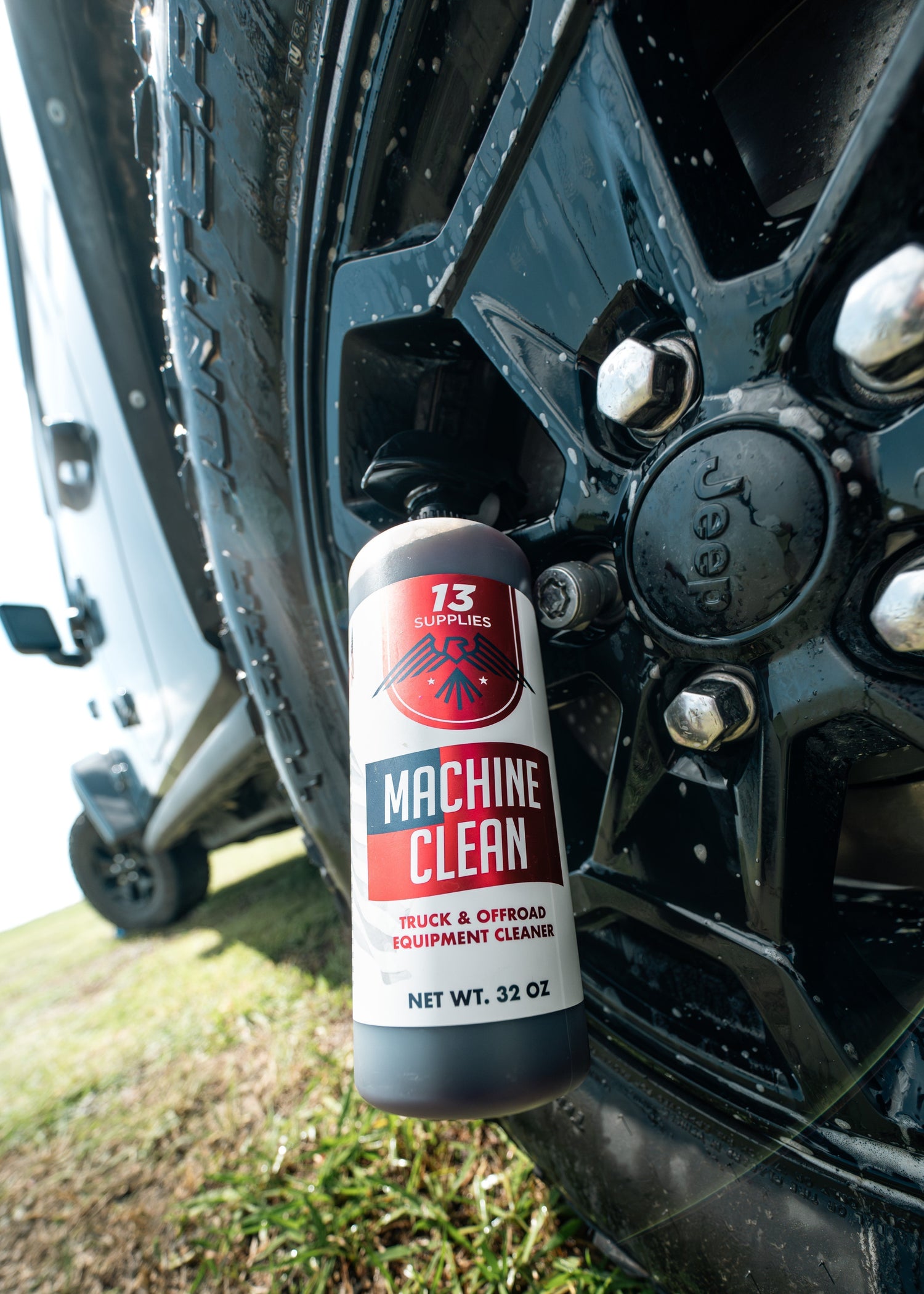
Wheels covered in brake dust and water spots? Our Acid Machine Clean: Wheel Cleaner & Water Spot Remover works on both alloy and chrome — made in the USA, veteran-owned. Pair it with the Red Detail Brush Set.
Key Takeaways
- Alloy and chrome wheels don’t just look different — their material makeup means they can’t be treated the same when cleaning.
- Alloy wheels are more durable, but prone to scratching and brake dust buildup.
- Chrome wheels are shinier, but their delicate material composition leaves them vulnerable to peeling and cracking.
- To extend your wheel life, proper maintenance and regular cleaning with the right chemicals are necessary.
What’s the Difference Between Alloy and Chrome Wheels?
What Are Alloy Wheels?
Alloy is a term for a material made from different metals — for wheels, this is usually aluminum and magnesium. The combination creates a wheel that’s both lightweight and strong enough to withstand daily wear and tear.
Alloy wheels are often painted or clear-coated to give them a sporty look, but that extra coating requires special care when cleaning. Alloy wheels are popular with performance vehicles and are less prone to rust, but they are easily scratched, corroded, and stained by brake dust.
What Are Chrome Wheels?
Chrome wheels aren’t actually fully chrome. They’re alloy or steel with a chromium coating that gives the reflective finish many car owners prefer, reflecting sunlight and showing off a shine that turns heads.
These wheels are corrosion-resistant, but only when properly maintained. Otherwise, the softness of chrome makes them susceptible to rust, peeling, and pitting.
Why Cleaning Methods Must Differ
Although both alloy and chrome wheels have a metallic core, how you clean them isn’t the same. Alloy wheels are finished with a coating that can withstand general wheel cleaners and abrasives, while chrome wheels require special, non-acidic cleaners that work gently.
The harsher chemicals of an alloy cleaner can ruin a chrome wheel in minutes. On the other hand, the gentle ingredients in a chrome cleanser might barely touch the grime and buildup on your alloy wheels.
Alloy vs Chrome Wheels Cleaning - Key Differences at a Glance
What are the differences between alloy and chrome wheels, and how do these variables affect cleaning? This table explains the details at a glance.
|
Feature |
Alloy Wheels |
Chrome Wheels |
|
Material |
Aluminum or magnesium |
Alloy base with a chromium plating |
|
Durability |
Resistant to impact and scratching |
Easily damaged and vulnerable to peeling or cracking |
|
Cleaner Type |
pH-balanced, non- or mildly acidic |
Chrome-specific, non-acidic, gentle soap |
|
Tools to Use |
Microfiber towels, wheel brush |
Soft sponges and microfiber cloths only |
|
Common Damage |
Brake dust buildup, clear coat peeling |
Pitting, rust, peeling+ |
How to Clean Alloy Wheels (Step-by-Step Guide)
Ready to get those alloy wheels back to just-off-the-dealership clean? Follow this step-by-step guide!
Tools & Products Needed
First, gather your materials. You’ll need:
- A pH-balanced alloy cleaner
- A soft wheel brush
- A hose or pressure washer (depending on whether you have a foam sprayer or foam gun, or just want to use your hose)
- Micofiber clothes
- A wheel sealant or wax (optional)
Step-by-Step Cleaning Process
Let’s get started!
First, use a water hose or pressure washer to remove any loose dirt and grime. This step matters, as even with a foam cannon, the extra buildup can reduce the soap’s effectiveness.
Next, make sure the wheels' surfaces are cool, then apply a wheel-specific alloy cleaner. Use a brush to gently scrub the cleaner onto the wheel, taking care to reach into hard-to-reach cracks and crevices, such as the lug nuts. Rinse the chemicals off, review your work, and repeat if necessary.
Finally, dry the wheel with a microfiber towel, patting instead of rubbing to prevent streaks and water spots. Add your wheel sealant or wax for added protection and shine!
Best Products for Alloy Wheels
The best products for alloy wheels are pH-balanced specifically for those metals. Avoid harsh chemicals like hydrofluoric acid and sodium hydroxide, which can scratch and damage the paint. For wheels with tough buildup, try 13 Supplies all-purpose cleaner.
How to Clean Chrome Wheels (Step-by-Step Guide)
When it comes to a clean car, there’s nothing that makes a detailer prouder than getting that mirror-like shine on a chrome wheel. Here’s how to make that happen without using a professional detailing service.
Tools & Products Needed
Be careful about using any old cleaner or tools on chrome wheels. Take some time to choose your products wisely, including:
- A chrome-specific cleaner or mild car soap
- Microfiber wash mitt and towels
- Chrome polish
- A sealant or ceramic spray
Step-by-Step Cleaning Process
The best chrome shine starts with a cool wheel. Cleaning a hot wheel leads to spotting. Rinse off any loose dirt to prevent it from scratching the delicate surface. Use your cleaner and a microfiber wash mitt or towel to gently wash away the remaining grime, taking care not to rub too hard.
Grab a clean microfiber cloth to apply polish and lightly buff the chrome. Then, dry thoroughly with another clean towel before applying a coat of sealant or ceramic spray. You should be able to see yourself clearly in the finished result!
Best Products for Chrome Wheels
Chrome wheels need special care. Unlike alloy wheels, which may hold up okay under your general household cleaner (although that’s not advised), chrome needs a non-acidic, non-abrasive, pH-balanced formula, like 13 Supplies’ Acid Machine Cleaner.
Common Mistakes When Cleaning Alloy Wheels
It won’t take long before you learn the best techniques and products that give you the results you want for your alloy wheels. Along the way, avoid these common mistakes:
- Don’t use harsh acidic cleaners. They can degrade the paint and clear coat on your wheels.
- Don’t skip cleaning the brake dust — it will eventually become a permanent stain on your wheels.
- Always pat dry with a microfiber cloth to prevent water spotting.
- Only use soft brushes or a microfiber cloth. Other sponges, especially steel wool, will scratch the surface.
Common Mistakes When Cleaning Chrome Wheels
Chrome wheels require patience and a gentle touch, but the result? Sheer, shiny perfection — as long as you avoid these frequent errors:
- Never use an alloy cleaner or degreaser on chrome. It will strip the chrome layer, leaving you with dull wheels.
- Never clean your wheels while they’re hot. This creates spotting and streaking on chrome.
- Stick with baby soft cloths. Even mild abrasives can scratch your delicate wheels.
- Always add a protective coating finish to prevent dulling and rusting.
How Often Should You Clean Alloy vs Chrome Wheels?
Keeping up with your car’s maintenance includes giving those wheels a little TLC, too. Alloy wheels need to be refreshed from the brake dust and oxidation before it becomes corrosive, at least every two weeks. Chrome wheels are sensitive to precipitation, so clean them after driving through wet roads (especially after exposure to road salt), and weekly to keep the shiny finish.
When it’s time to give your vehicle the care it deserves, explore 13 Supplies for premium cleaning products. From off-road vehicles, trucks, and heavy machinery to your delicate chrome wheels, our special formulas help every surface look its best.
FAQs
Question 1: Can I use the same cleaner for alloy and chrome wheels?
No, alloy cleaners often have harsher ingredients that can damage chrome plating. Always use chrome-specific cleaners for your chrome wheels.
Question 2: Is vinegar safe for chrome wheels?
Vinegar is a popular cleaning product, but it should never be used on chrome wheels. It can lead to clouding and corrosion over time.
Question 3: What removes brake dust from alloy wheels?
To dissolve brake dust and prevent corrosion on alloy wheels, use a pH-balanced alloy wheel cleaner or a mildly acidic cleanser designed for alloys.
Question 4: How do I prevent chrome wheels from rusting?
Chrome is vulnerable to rusting, but keeping it clean after exposure to moisture (think: rain, snow, and road salt) can prevent damage. Be sure to dry thoroughly after washing.
Question 5: Are chrome wheels harder to maintain than alloy wheels?
Absolutely. Chrome wheels require a gentle touch and frequent cleaning to prevent pitting and rust. Alloy wheels still need upkeep, but they’re not as delicate.
Shop Wheel Cleaning Supplies
The wheel kit this guide recommends:
- Acid Machine Clean: Wheel Cleaner & Water Spot Remover — brake dust, oxidation, and water spots on alloy and chrome
- Red Detail Brush Set for Wheels & Auto Detailing — soft and boar’s-hair brushes for spokes and barrels
- Black Ops Tire Dressing & Trim Restorer — finish the job with a deep, no-sling satin black
Related reading: How to Clean Dirty Wheels — Best Methods for Alloy & Chrome. Every order supports our troops — see how.

Leave a comment
This site is protected by hCaptcha and the hCaptcha Privacy Policy and Terms of Service apply.