
| Table of Contents |
| 1. Key Takeaways |
| 2. Tools & Products You’ll Need |
| 3. Preparing Your Wheels |
| 4. Step-by-Step Cleaning Method |
| 5. Conclusion |
Key Takeaways
- Cleaning your car’s wheels is an essential part of maintenance to keep it running and looking its best.
- The type of wheels you have determines how to clean them.
- With high-quality tools and proper preparation, alloy and chrome wheels can remain in good condition throughout the life of your car.
Brake dust, road grime, salt, and more pile up on your wheels, keeping your car from looking its best. You’ve mastered the professional-style art of cleaning the panels; now, you want to know how to clean dirty wheels. But the answer to the question of the best way to clean wheels depends on whether you’re working with alloy or chrome.
In this article, we’ll break down both, including the tools and products you’ll need, how to prepare your wheels, and step-by-step cleaning methods for both alloy and chrome.
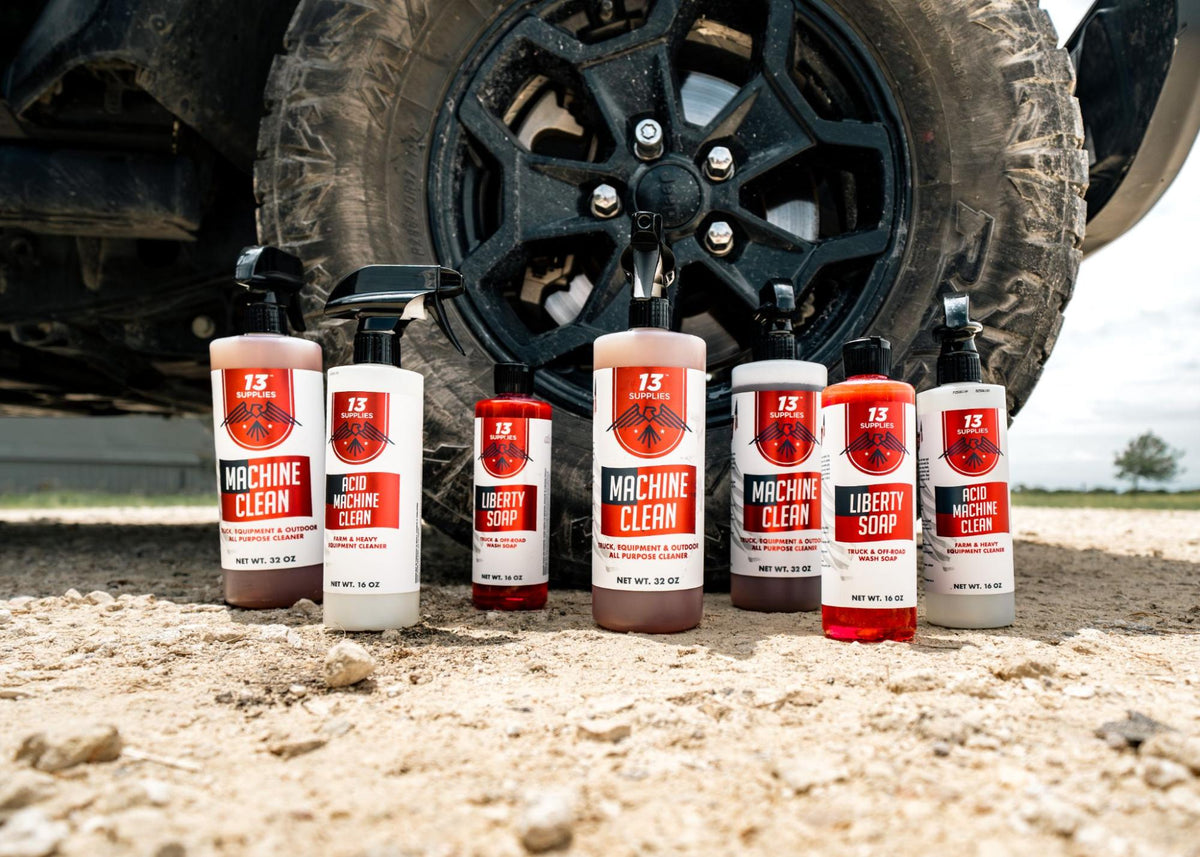
Wheels caked in brake dust? Our Acid Machine Clean: Wheel Cleaner & Water Spot Remover cuts through it on alloy and chrome, and Black Ops Tire Dressing finishes the look — made in the USA, veteran-owned.
Tools & Products You’ll Need
Investing in high-quality products and tools, like those we offer at 13 Supplies, ensures your equipment lasts longer, and your car is safe from scratches and chemical damage. Both chrome and alloy wheels need a reputable, effective cleaning product suitable for the wheel type, a soft-bristle wheel brush, and microfiber towels. If you know you’re dealing with stubborn grease or grime, add a wheel-specific degreaser and a detailing brush to the list. Your last step will be adding a wheel sealant or wax to protect against future buildup — a step you’ll appreciate even more after your first deep-cleaning of your wheels! The two we reach for on every wheel job: the Wheel Cleaner & Water Spot Remover and the Red Detail Brush Set.
Preparing Your Wheels
The best way to clean dirty wheels begins with cool metal temperatures (never clean your wheels right after you’ve been driving, as this can cause the chemicals to dry too quickly and leave residues) and a pre-rinse. Just as you wouldn’t dive straight into scrubbing your car with soap and a brush without first applying a lubricant, you don’t want to clean your alloy or chrome wheels without that water rinse.
Step-by-Step Cleaning Method
From a distant perspective, it can look like the best way to clean alloy wheels is the same as cleaning chrome wheels. But there’s a distinct difference in the two metals that makes the process very different.
Chrome has a mirror finish that’s easily scratched, so the best way to clean chrome wheels is to use non-abrasive cleaners and polishes. Alloy’s unique composition gives it a clear coat rather than the delicate chrome plating. This makes it less prone to scratching but requires a protective sealant to keep the alloy safe from buildup.
Once you have the right tools, though, the steps to cleaning your wheels look similar:
- Rinse the wheels thoroughly to remove any grime, brake dust, or stubborn debris.
- Spray on the right wheel cleaner (pH-balanced for alloys or pH-neutral for chrome).
-
Let the cleaner sit for a few minutes before scrubbing and washing with a mitt.
Pro tip: Never let the cleaner sit long enough for it to dry, which can cause spotting and damage to the wheels. - Use a soft-bristle, non-abrasive wheel brush, taking care to get those tight areas around the lug nuts and spokes.
- Rinse thoroughly in a top-to-bottom motion to remove all soap and cleaner. Check for any stubborn grime and use your wheel brush (and a spray of cleaner, if necessary) to remove it, rinsing immediately.
- Dry wheels with a microfiber towel. Use a blotting or patting method to prevent streaks and water spots.
- Finish with a wheel sealant or metal-specific wax to prevent further buildup and corrosion, and keep that shiny look lasting longer.
Remember, chrome wheels can be permanently damaged by acidic cleaners, ammonia, harsh brushes, and steel wool. Alloy wheels have a little more play, but are still easily damaged with the wrong products. Shop 13 Supplies to ensure you’re using high-quality cleaning products and tools designed for your wheel type.
Conclusion
Keeping your wheels clean is about more than looks. This step in vehicle maintenance prevents long-term damage from brake dust and debris buildup. But household cleaners, even those that say they’re “all-surface-friendly,” are full of chemicals that can damage your alloy or chrome wheels. Shop 13 Supplies for high-quality cleaning products that extend the life of your wheels and give them a professional finish without the premium price tag.
Shop Wheel Cleaning Supplies
Everything this guide uses, made in the USA by a veteran-owned company:
- Acid Machine Clean: Wheel Cleaner & Water Spot Remover — brake dust, grime, and water spots
- Red Detail Brush Set for Wheels & Auto Detailing — spokes, barrels, and lug areas
- Black Ops Tire Dressing & Trim Restorer — deep satin black, zero sling
- Freedom Fresh — car interior cleaner to match the fresh finish on your wheels
Or save with a bundle. Related reading: Alloy vs. Chrome Wheels: Cleaning Methods, Products, and Common Mistakes. Every order supports our troops — see how.

Leave a comment
This site is protected by hCaptcha and the hCaptcha Privacy Policy and Terms of Service apply.