
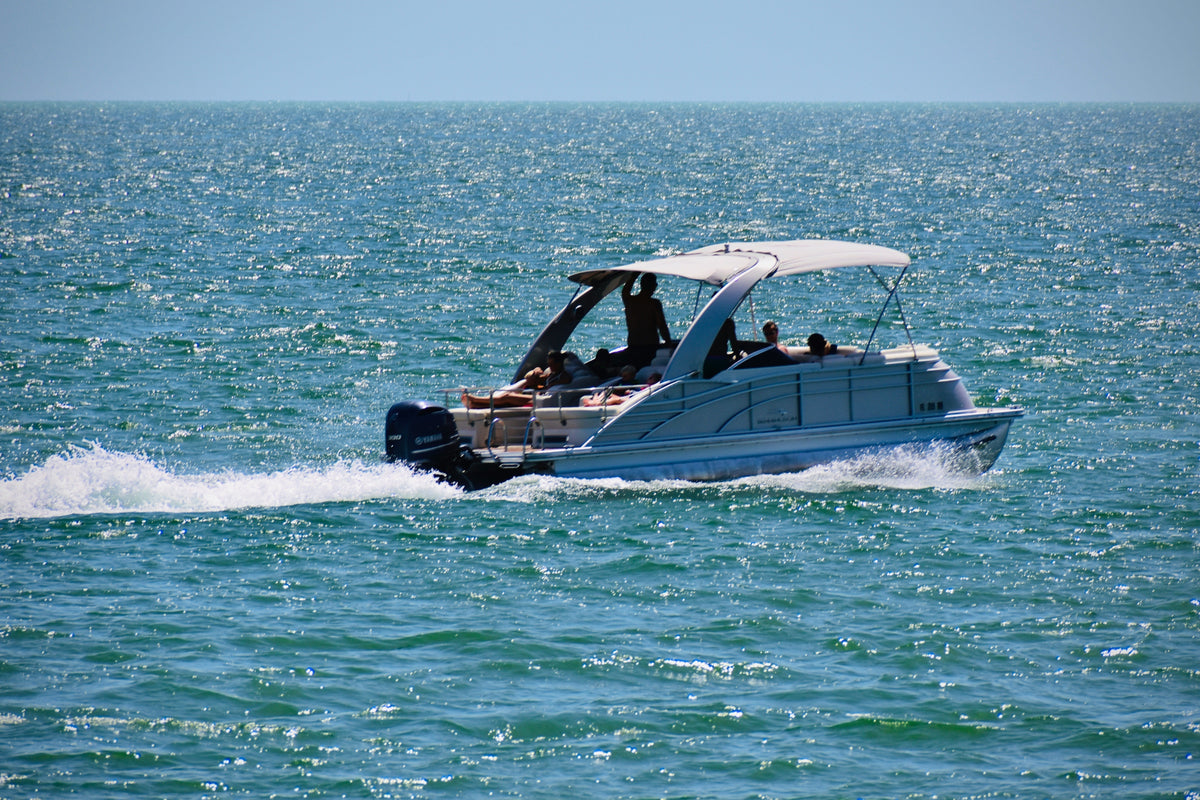
There’s nothing quite like the sun shining down on a gleaming pontoon boat as you get ready to launch for the day. But regular cleaning isn’t just about keeping your boat showroom-ready. It ensures protection against damage from the elements, avoiding oxidation, corrosion, and algae buildup that can cause maintenance problems and shorten your boat’s lifespan.
Whether you’re washing up after a day on the lake or tackling seasonal boat cleaning, proper boat care keeps your pontoon looking great and performing even better. This step-by-step guide covers everything you need to keep your pontoon in prime condition for that like-new shine today and ensure years of “smooth sailing” adventures to come.
Cleaning your pontoon this weekend? This guide is built around our Acid Machine Clean: Boat Cleaner, Water Spot & Oxidation Remover — made in the USA and veteran-owned. Want the full kit? Shop our bundles.
What You Need to Clean a Pontoon Boat (Products & Tools)
Pontoon tube oxidation, waterline stains on your pontoon, and other wear-and-tear issues can degrade your boat’s systems. Keeping your boat in “ship-shape” isn’t just a matter of cleaning, though. Because you’re on the water, everything you do affects this fragile ecosystem, so you need to use marine-safe cleaning products.
How to clean a pontoon boat is equal parts knowledge and tools. For the best end-of-season boat care and in-between upkeep, we recommend investing in these optimal products and tools:
- A garden hose or pressure washer
- Marine-safe cleaner/mild boat soap
- An aluminum oxidation removal cleaner
- Marine-grade sponge, microfiber cloth, and soft brush
- Vinyl upholstery cleaner boat-friendly
- Marine-safe deck and carpet cleaner
- Pontoon boat wax or aluminum sealer
Finish your list with the essentials for any cleaning job: a bucket, a spray bottle, and gloves. Grab your sunglasses and a hat if it’s a sunny day, and follow these steps to get your pontoon clean and protected.
Step 1 — Rinse the Entire Boat Before You Apply Any Product
The first step to cleaning your pontoon is the one that many people skip — yet, it can be the make-or-break between a boat that lasts and one that quickly deteriorates. The freshwater rinse removes lake grime, debris, and dirt before you apply soap and scrub.
Getting rid of this layer of contaminants prevents them from scratching your boat’s paint when you start to do the deeper cleaning with the best pontoon cleaner you found. This step is also essential if you’ve been in saltwater; otherwise, the salt will leave deposits and increase corrosion.
Using moderate pressure settings (or gentle settings on a pressure washer), apply water from your hose to rinse off the sand and algae from the surfaces. Be sure to include the deck, tubes, and rails, working from top to bottom to keep runoff from dirtying the areas you already cleaned.
Step 2 — Deep Clean the Aluminum Pontoon Tubes
Your pontoon tubes, or logs, as some people call them, are the structures that provide your boat’s buoyancy and stability. If they begin to degrade, your ability to float — and stay safe — decreases. Deep cleaning these tubes is a must for your boat’s longevity.
Removing Waterline Stains, Lake Grime & Algae from Pontoon Tubes
Start by using a pontoon-formulated marine aluminum cleaner to eliminate the lake grime, lime deposits, algae, and waterline stains on pontoon tubes. Spray or brush the cleaner onto the affected areas, and allow the chemicals to sit for 3-5 minutes (or as directed) to break down the grime. Use a soft-bristled brush or sponge, rubbing in circles, to gently scrub the cleaner across the surfaces, then rinse thoroughly. Our boat and pontoon cleaner is formulated exactly for this job — it lifts waterline stains and lake grime from aluminum without harsh scrubbing.
Note: You should always avoid harsh cleaners or bleach. Not only are these products unsafe for the marine environment, but they also scratch the aluminum surfaces. Use a gel-based cleaner for stubborn waterline stains, or apply your choice of product, scrub, and rinse twice.
Removing Oxidation from Aluminum Pontoon Tubes
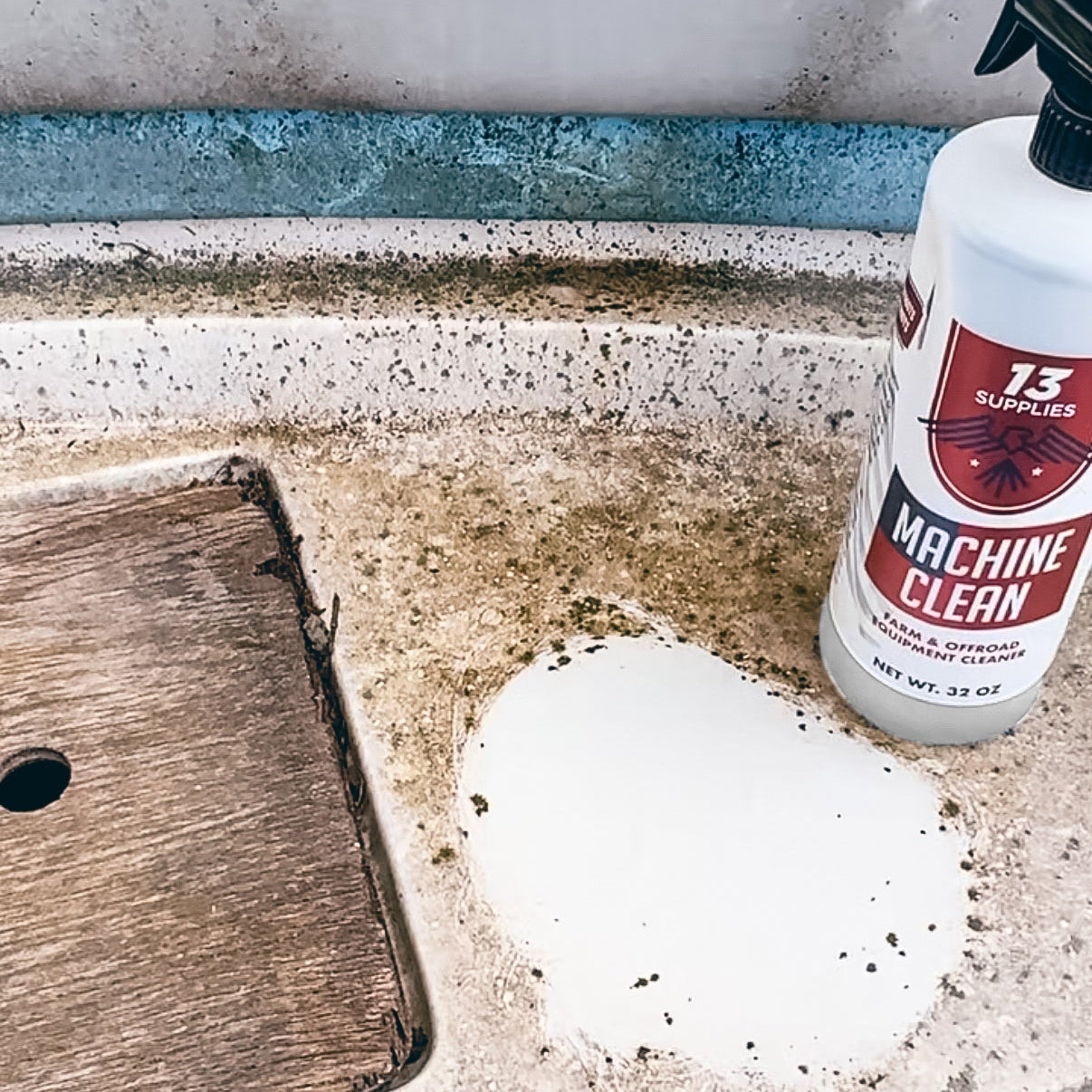
Oxidation is the enemy of a pontoon boat’s shine and glow. Appearing as a chalky or white haze, this buildup can be challenging to remove once it’s settled. You’ll need an aluminum oxidation removal product for this task. For chalky buildup and water spots across the rest of your boat and trailer, a heavy-duty acid machine cleaner dissolves oxidation and mineral deposits on contact.
Apply a small amount to the surface, and use a microfiber cloth or a polishing pad to gently rub the cleaning product over the oxidation. Work in small sections, drying each area with a clean towel before moving on to the next spot. For heavily oxidized areas, you might need a marine-grade buffing pad with a low-speed polisher.
Note: Steel wool is never the answer; instead of helping, it creates deep, permanent scratches and increases corrosion.
Step 3 — Wash the Hull, Deck, and Railings
Exposed to all the damage of the sun, rain, and wind, the upper part of your pontoon needs a lot of TLC. However, this area, including the hull, deck, and railings, is also more durable than the delicate pontoon tubes, so you can use boat soap and water to scrub away the debris here.
As you clean, start with the hull and railings (working in that top-down movement). Grime builds up in easily missed areas, like the stairs, corners, and welded joints, so pay extra attention to those tight edges. Rinsing and drying before you move on to a new section prevents streaks and water spots.
Note: If your railings are stainless steel or powder-coated, use a mild cleaner, then follow up with a protectant spray to keep the metal gleaming longer.
Step 4 — Clean the Pontoon Interior: Carpet, Deck, and Seats
Water splashes, rain, the sun, and spills are common dangers to the carpet, deck, and seats in your pontoon. When it comes to boat interior cleaning, you need products that are marine-safe but can prevent mold and mildew buildup and staining.
How to Clean Pontoon Boat Carpet and Deck Flooring
Start by vacuuming and sweeping away loose debris in the carpet and deck flooring. Follow this step with a marine carpet cleaner or soap mix to scrub away any caked-on stains or mud. Scrub in small sections using a soft or medium-bristled brush, rinsing thoroughly after cleaning.
Be sure to avoid adding so much water to an area that it puddles, as this oversaturation can damage the deck or carpet. Let the whole floor dry in the sun before you store or cover your boat.
Cleaning Pontoon Boat Seats and Vinyl Upholstery
Boat seats and vinyl upholstery need different cleaning products from the carpets and decks. The vinyl can degrade if left exposed to the UV rays, sunscreen, and typical spills of a day on the water.
Spray a vinyl upholstery cleaner designated as a pontoon seat cleaner or as made for boats directly onto the seats and seams. Use a soft brush to gently remove any stubborn grime, working in small sections. Rinse and dry the area, then move on to another spot. Apply a UV conditioner after cleaning to prevent cracking and discoloration.
Note: Never use household cleaners, even if they say “all-purpose.” Boat vinyl upholstery and seats need boat-specific products, and regular household cleaners strip the protective coatings and encourage mildew growth in the seat’s stitching. 13 Supplies Machine Clean: All Purpose Cleaner is boat-safe and strong enough to handle deep stains and mud buildup.
Step 5 — Polish and Protect the Aluminum Tubes
Your carpets, railing, and deck are clean. The seats are protected against spills and sun damage, and the whole boat is dry. But you’re not done yet. Remember how we discussed the importance of your pontoon tubes? Before you put your boat away, it’s time to polish and protect the aluminum, sealing it away from future oxidation and grime.
Using a polishing applicator, apply a pontoon boat wax or aluminum sealer evenly across the tubes. Buff the surface with a microfiber cloth until it’s smooth and shiny. Read the instructions on the product you used to ensure it cures sufficiently before you get the tubes wet again.
Note: Applying wax or a sealer repels water and slows oxidation. It’s an extra step now, but it will make cleaning your boat much easier the next time you do it!
How Often Should You Clean Your Pontoon Boat?
Speaking of “next time,” how often should you clean your pontoon boat? While a rinse and spot removal are suggested after every outing, especially if you were in saltwater, the deep cleaning can be done monthly during the active boating season. Complete a thorough deep cleaning using 13 Supplies’ professional, marine-safe boating products at the end of the season, before you store your boat for the winter, to keep your pontoon looking fresh and new longer.
Pontoon Boat Cleaning FAQ
What is the best way to clean pontoon tubes?
Learning how to clean pontoon boat tubes is a vital step for a boat owner. Algae removal pontoon boat cleaning is crucial to prevent tube deterioration. Use marine-safe cleaner and a soft brush to scrub away buildup, then rinse thoroughly.
Can I use Dawn dish soap to clean a pontoon boat?
Dawn dish soap is considered marine-safe and does clean surfaces well, but it can also strip protective coatings. Instead, use a marine-safe cleaner designed for your pontoon’s vinyl and aluminum surfaces, and a boat carpet cleaner for the deck.
Should you wax pontoon tubes?
Definitely! Applying pontoon wax repels water and dirt, adds shine, and protects against oxidation.
How do you remove heavy oxidation from aluminum pontoon tubes?
Heavy oxidation can be removed using a dedicated aluminum oxidation remover and a gentle polishing buffer at low speed.
How often should I deep clean my pontoon boat?
Deep cleaning your pontoon boat is only necessary after heavy use or at the end of the season, before you put your boat into storage.
How to Clean Pontoon Boat Carpet
Pontoon carpet gets dirty in a way the rest of the boat doesn't. It holds water, and it holds smell. So knowing how to clean pontoon carpet really means handling three things a quick wash won't touch: mildew, stains that have set in, and moisture trapped under the cover.
Mildew shows up as black or gray spotting along the snap-in edges and under the seat bases, and you usually smell it before you see it. Skip the bleach. Same rule as the rest of this boat: harsh household cleaners chew up marine surfaces and end up in the lake. Spray a marine-safe all-purpose cleaner like Machine Clean on the spotted areas, give it two or three minutes to work, then scrub with a medium-bristle brush and rinse. If a spot fades but doesn't clear, run it again instead of reaching for something stronger.
Set-in stains need spot treatment before any full-carpet scrub. Fish blood and scales, sunscreen, spilled drinks, and grease off your tackle box all behave differently, but the order of operations is the same:
- Lift what's still sitting on top. Scrape scales and dried grease off with a plastic edge so you're not grinding them deeper.
- Hit the spot itself, not the whole panel, and let the cleaner dwell two to three minutes.
- Scrub in short strokes from the outside of the stain inward so you don't spread the ring.
- Rinse light, then press a dry towel into the spot to pull the water and loosened grime back out.
Then dry it properly, because that's where most people lose. Trapped moisture under a boat cover is the number one reason mildew comes right back three weeks later. Unsnap the carpet, stand the panels on edge in the sun, and check the backing, not the nap. The top can feel dry while the underside is still damp. Cover it too early and you've built yourself an incubator.
Know when to quit cleaning. If the backing is delaminating, the edges curl and won't snap flat anymore, or the mold has grown through the backing instead of sitting on the surface, replace the panel. You'll spend more weekends treating that carpet than a new piece would cost you, and it will never stop smelling.
Conclusion
A well-maintained pontoon is something to be proud of, but even more importantly, regular cleaning and pontoon boat maintenance keep your boat adventure-ready for years to come. With 13Supplies’ marine aluminum cleaner, professional-grade products, and consistent care, your boat will be ready to make sunny lake-day memories season after season, and you’ll enjoy the well-deserved pride of a gleaming pontoon.
Shop Pontoon & Boat Cleaning Supplies
Everything used in this guide, made in the USA by a veteran-owned company:
- Acid Machine Clean: Boat Cleaner, Water Spot & Oxidation Remover — pontoon tubes, waterline stains, and oxidation
- Machine Clean: All-Purpose Cleaner — decks, seats, railings, and vinyl
-
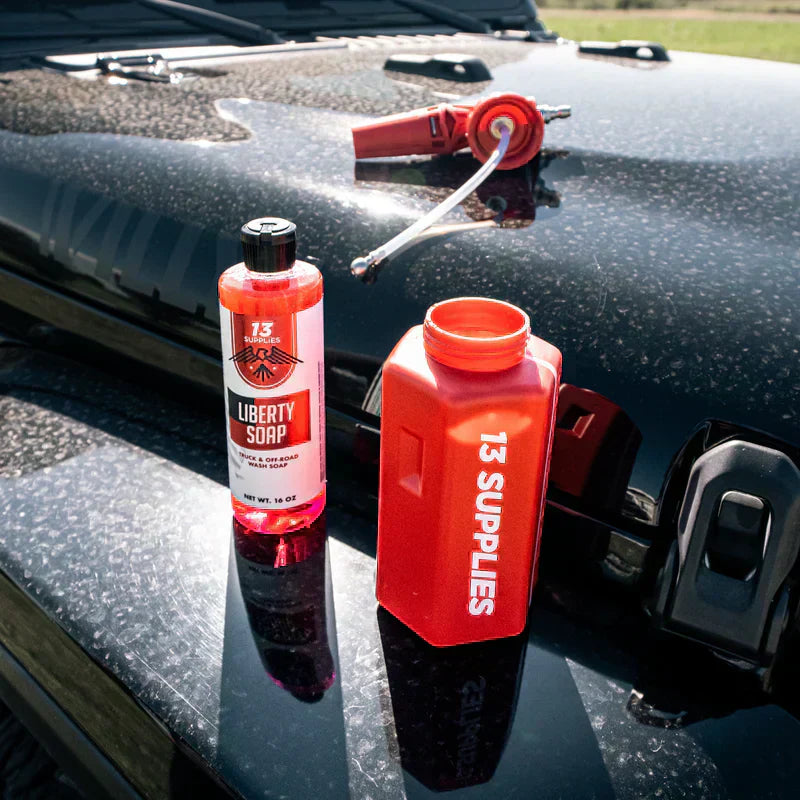
Liberty Soap: high-foaming wash soap — hull and topside washdowns
- Freedom Fresh — car interior cleaner for finishing the cabin once you're off the water
Related reading: How to Clean a Boat Hull: Remove Algae, Stains, and Oxidation. Every order supports our troops — see how.

Leave a comment
This site is protected by hCaptcha and the hCaptcha Privacy Policy and Terms of Service apply.