
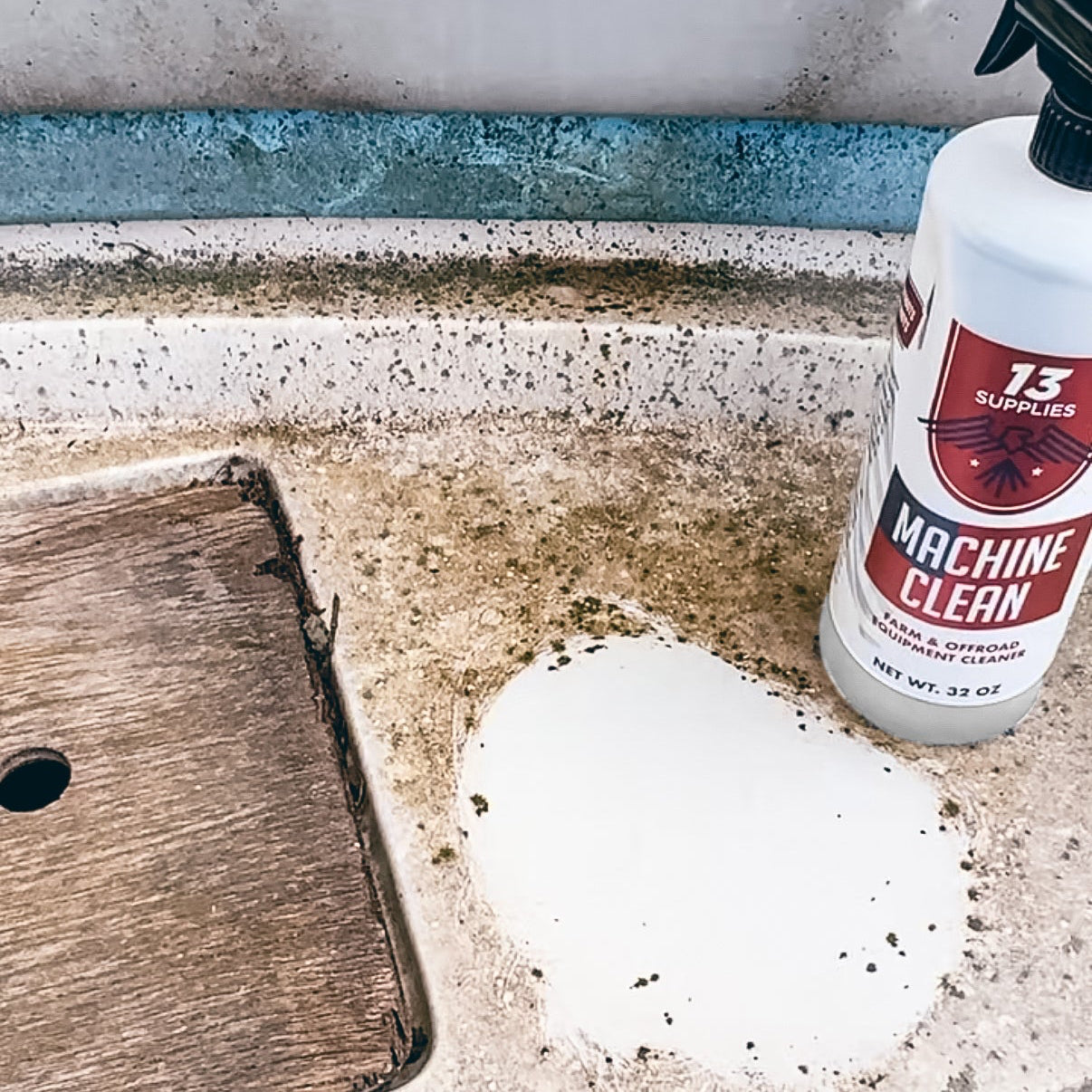
You pulled the boat out of the water, and now you're staring at a hull covered in green slime, brown rust streaks, and that stubborn white chalky coating on the pontoon tubes that just won't budge. You grabbed a cleaner from the hardware store, scrubbed hard, and it barely made a dent. Does this sound familiar?
Dirty hulls aren't just an eyesore. Left alone, algae, mineral stains, and oxidation can eat into your hull material, slow your boat down, and cost you real money in repairs or resale value. With the right approach and products, cleaning a boat hull is a pretty straightforward job. This guide walks you through identifying the type of buildup you're dealing with, choosing the right cleaner for each problem, plus how to clean boat hulls with a simple, step-by-step process.
Staring at a stained hull? Our Acid Machine Clean: Boat Cleaner, Water Spot & Oxidation Remover handles algae lines, mineral stains, and oxidation — made in the USA, veteran-owned. Or grab a bundle and save.
Why Cleaning an Aluminum Boat Hull is Important
A hull covered in algae, barnacles, or mineral deposits creates drag. That drag forces your engine to work harder, burns more fuel, and slows your top speed. A clean hull moves through water the way it was designed to.
Corrosion prevention is especially important for aluminum boats and pontoons. Aluminum naturally forms a protective oxide layer, but when that layer is compromised by harsh cleaners, saltwater, or standing deposits, the metal underneath starts to corrode. Catching and treating oxidation early is far easier than dealing with pitting later.
A clean hull lets you actually see what you are working with. Cracks, stress points, and blistering in fiberglass are easy to miss under a layer of algae or grime. Regular cleaning means you catch those problems before they become expensive ones.
Types of Stains and Growth Found on Boat Hulls
Before you reach for a cleaner, it helps to know what you are actually dealing with. Various problems need different solutions, and using the wrong product can sometimes make things worse, not better.
You'll see green, brown, or black slime collecting wherever water sits or splatters. This algae or marine growth is soft and relatively easy to remove when fresh, but if left long enough, it bonds to the surface and becomes harder to break down. On fiberglass, it can stain the gelcoat underneath.
Rust streaks and waterline mineral stains can show up as brown or orange streaks running down the hull, usually from metal hardware, anchor chains, or minerals in the water itself. They look like rust but are often iron or calcium deposits. Acid-based cleaners break these down effectively.
Fiberglass gelcoat oxidation appears as a dull, chalky, or faded surface on fiberglass boats. Oxidation happens when UV exposure breaks down the resin in the gelcoat. The surface loses its gloss and becomes porous. If you drag your finger across it and come away with white residue, you are dealing with oxidation. Gelcoat oxidation removers and polishing compounds are needed here.
Aluminum oxidation can occur on pontoon tubes. This isn't the same problem as fiberglass oxidation, and requires different chemistry. The white, chalky coating on pontoon tubes forms when the aluminum's anodized surface layer breaks down. The anodized layer is what protects the aluminum underneath, so the cleaner you use matters.
Generic household cleaners and highly acidic products can strip away that protective layer entirely. You need a cleaner that removes oxidation without damaging the anodized coating, which is exactly why off-the-shelf options so often fall short.
Choosing the Best Products for Boat Hull Cleaning
The key is matching the right product to the problem. Using a general-purpose cleaner on aluminum oxidation or a mild soap on heavy rust stains will leave you frustrated and your hull still dirty.
Acid-based hull cleaners are built for mineral stains, rust streaks, and waterline deposits. They dissolve calcium and iron buildup that scrubbing alone cannot remove. These are effective on fiberglass and painted hulls, but shouldn't be used on bare aluminum without checking compatibility first.
Aluminum oxidation shows up on pontoon tubes, but it’s a different animal than fiberglass. It needs a different type of cleaner to clear that white, chalky film that forms when the anodized layer starts to wear down. The anodized layer is what protects the aluminum underneath, so the cleaner you use matters.
Gelcoat oxidation removers are compound-based products that work by lightly abrading and chemically treating the surface to restore gloss and remove the dull, chalky layer. These are followed by a polish and wax to protect the surface afterward.
Deck cleaners are formulated for flat surfaces where water sits and organic growth accumulates. They handle mildew, algae, and general grime without damaging non-slip surfaces or vinyl.
Step-by-Step Boat Hull Cleaning Process
Work through these steps in order. Skipping ahead or rushing the process usually means going back and redoing it.
Step 1: Remove the Boat from the Water and Clear the Deck
Cleaning a hull while it's in the water discharges cleaner runoff directly into the surrounding water, which is a problem both environmentally and legally in many areas. Most states have regulations about cleaning product runoff into waterways, so check your local rules before you start.
Get the boat out of the water and onto a trailer or solid ground. Remove anything loose from the deck: gear, seats, cushions, and anything stored in compartments that could get wet or in the way. This also gives you a clear look at the full hull so you can assess what you are working with before you start.
Step 2: Pre-Rinse with Fresh Water
Give the hull a good rinse with fresh water first. It’s an easy step to skip, but it really helps. You’re just knocking off the loose stuff like algae, salt, and dirt, so your cleaner isn’t trying to work through all that before it even hits the actual stains.
Salt water, in particular, needs to be fully flushed off before you apply products. Salt residue can react with hull cleaners, reducing their effectiveness. It can also cause streaking on fiberglass if left to dry on the surface.
Step 3: Apply Hull Cleaner by Section
Don't try to coat the whole hull at once. Work in manageable sections, roughly 3 to 4 feet at a time, so the cleaner doesn't dry out before you have a chance to agitate it and rinse.
Apply your hull cleaner according to the product directions and let it dwell for the recommended time. Then agitate with a soft-bristle brush. On fiberglass, moderate pressure is fine. But on painted surfaces, go lighter to avoid cutting through the paint. Don't use wire brushes or abrasive pads on any hull surface.
Step 4: Pontoon Tubes and Aluminum Surfaces
The white oxidation on pontoon tubes isn't the same thing as algae or mineral staining, and it won't respond to the same products.
Apply an aluminum-specific oxidation cleaner to the tubes in sections. These formulas are designed to break down the chalky layer while leaving the anodized protective coating intact. Agitate with a soft brush or non-scratch pad and work in the direction of the grain if the aluminum has a brushed finish.
Step 5: Final Rinse, Polish, and UV-Protective Wax Coat
Once you've worked through the entire hull, do a final full rinse with fresh water. Be thorough. Any cleaner left on the surface can continue to work after you think you're done, and on aluminum, especially, that can mean damage.
Dry the hull with microfiber towels. Let it air for a bit before applying any polish or wax. For fiberglass, apply a UV-protective marine wax. This fills in the microscopic pores in the gelcoat and creates a barrier against UV, salt, and future staining. If you treated oxidation earlier, apply a polish first before the wax coat.
For aluminum pontoon tubes, use a product compatible with anodized surfaces. Waxing the tubes is a habit worth building. It makes the next cleaning significantly easier and slows future oxidation.
While you have everything out, this is a good time to clean and condition any vinyl seating or covers as well.
Boat Hull Cleaning Tips to Prevent Future Buildup
A few key boat hull cleaning tips will help prevent future buildup, or at least delay it a bit. First, always rinse with fresh water after every outing. Salt, minerals, and algae spores attach quickly to hull surfaces. A thorough rinse after each trip on the water removes them before they have a chance to bond.
Apply antifouling paint below the waterline. If your boat lives in the water, antifouling paint creates a chemical barrier that slows or stops marine growth from attaching. Reapply on the schedule recommended for your climate and water type.
Stick to a waxing schedule. Wax protects fiberglass gelcoat from UV degradation and gives algae, minerals, and grime less surface to grip. You should wax twice a year at a minimum, spring and fall, and more often if the boat sees heavy use.
Store out of the water when possible. The less time the hull spends submerged, the less opportunity there is for marine growth, mineral staining, and waterline buildup. Dry storage is the simplest prevention available.
Frequently Asked Questions
How do I remove green algae from a fiberglass boat hull?
To remove green algae from a fiberglass boat hull, start by spraying with a fresh water rinse to knock loose the surface growth. Then apply a hull cleaner formulated for fiberglass and let it dwell for the recommended time.
Agitate with a soft-bristle brush, rinse thoroughly, and follow up with a polish and wax coat. For heavy algae staining of the gelcoat, an oxidation remover may be needed after the initial cleaning.
What is the best hull cleaner for fiberglass boats?
The best option for fiberglass boats is an acid-based hull cleaner rated for fiberglass. These handle mineral stains, rust streaks, and algae effectively without damaging the gelcoat. After cleaning, always follow with a UV-protective marine wax to protect the surface and keep future cleanups easier.
Can I use the same cleaner on fiberglass and aluminum?
In most cases, no, you can't use the same cleaner on fiberglass and aluminum. Products formulated for fiberglass are often too acidic for aluminum and can damage the anodized surface layer. Aluminum pontoon tubes need a cleaner specifically designed for that material. Always check the product label for material compatibility before applying anything to a new surface.
How often should I clean and wax my boat hull?
A good timeline for cleaning and waxing your boat hull is twice a year, typically in spring before the season starts and in fall before storage. If your boat sees heavy use, sits in the water full-time, or spends time in salt water, more frequent cleaning will keep buildup from getting ahead of you.
How do I clean oxidation off aluminum pontoon tubes?
To clean oxidation off aluminum pontoon tubes, use an aluminum-specific oxidation cleaner, not a general hull cleaner. Apply in sections, agitate with a soft brush, and rinse before the product dries. Follow up with a wax or sealant rated for anodized aluminum. Avoid wire brushes, abrasive pads, and any product with a very high acid content, all of which can damage the anodized layer and leave the aluminum less protected than when you started.
Conclusion: A Cleaner Hull Starts with the Right Products
Most hull cleaning problems come down to one of three things: algae and marine growth, mineral stains and rust, or oxidation on fiberglass and aluminum. Each one needs a different product and a slightly different approach. Treating them the same way is why so many store-bought cleaners disappoint.
13 Supplies was founded by Greg Dolbow and his son after running into this exact problem in the family business. Nothing on the shelf was built for real-world use on trucks, heavy equipment, and aluminum-heavy watercraft. So they built it themselves. The 13 Supplies pontoon cleaning line came out of that same frustration: products that actually work on aluminum oxidation without damaging the surface underneath.
If your pontoon tubes are due for a clean, visit the 13 Supplies pontoon cleaning page to find the right product for the job.
Shop Boat Hull Cleaning Supplies
The gear for the job, made in the USA by a veteran-owned company:
- Acid Machine Clean: Boat Cleaner, Water Spot & Oxidation Remover — algae, waterline stains, and oxidation on the hull
- Machine Clean: All-Purpose Cleaner — decks, topsides, and general grime
- Liberty Soap: high-foaming wash soap — the full washdown after the deep clean
Related reading: How to Clean Aluminum Boats. Every order supports our troops — see how.

Leave a comment
This site is protected by hCaptcha and the hCaptcha Privacy Policy and Terms of Service apply.